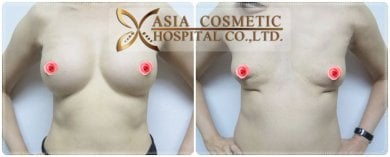


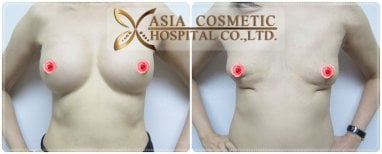


- 術式:インプラント不使用
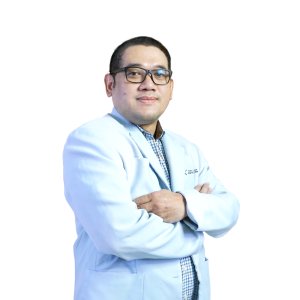
- タナコム・ライサクル医師は、乳房外科、ボディコントアリング、および顔面若返り術の分野における第一人者です。
- アジア・コスメティック病院は、患者ケアおよび安全基準において最高水準を保証する権威ある JCI 認定を取得しています。
- 費用に含まれるもの:医師による診察、ビデオまたはテキストによる相談、全身麻酔、薬剤、個室、空港―クリニック間の送迎。
ミーワサナ医師は、乳房インプラント除去と再建技術の高度な訓練を専門としています。
カセムサック・ピュンタナスップ医師は、乳房インプラント除去術を含む乳房外科を専門とし、米国およびタイの一流医療機関にて研鑽を積んでいます。
You can combine breast implant removal with a breast lift or fat transfer in a single surgery in Thailand. This approach addresses post-explant sagging or volume loss while minimizing risks. Surgeons perform these procedures together to ensure immediate aesthetic results and a single recovery period.
Bookimed Expert Insight: Thailand’s top-tier hospitals like Yanhee and Wansiri provide a distinct safety advantage by having 100+ specialized doctors on-site. While many boutique clinics offer these combinations, choosing a high-volume hospital ensures access to advanced HEPA-filtered operating rooms and immediate cardiologist supervision. This infrastructure is why clinics like Asia Cosmetic Hospital maintain a 0% complication rate for complex breast revisions.
Patient Consensus: Patients report that combining a lift with removal is essential if sagging is significant. Most suggest budgeting for post-operative lymphatic massages to improve skin contraction and optimize scar healing.
En bloc capsulectomy is a specialized surgical technique where the breast implant and the surrounding scar tissue capsule are removed as a single, unopened unit. This method ensures that silicone, biofilm, or pathogens remain trapped inside the capsule, preventing contact with the body.
Bookimed Expert Insight: While many patients request en bloc for Breast Implant Illness, the technical difficulty increases risks to the ribs and lungs. In Thailand, high-volume centers like Yanhee International Hospital or Bumrungrad International Hospital utilize board-certified surgeons with experience in thousands of cases. If a capsule is too thin or adhered to vital structures, top surgeons will transition to a total capsulectomy for safety. Always confirm with your surgeon if they provide the necessary documentation to prove the capsule was removed completely intact.
Patient Consensus: Patients often choose this method to ensure total removal of all foreign material. Those who have undergone the procedure emphasize the importance of requesting photos of the intact capsules to verify the technique was successful.
Early warning signs of post-operative complications after breast implant removal in Thailand include sudden, asymmetric swelling, high fever over 101°F, and respiratory distress. While bruising and mild soreness are normal, escalating pain, foul-smelling discharge, or red streaks near incision sites require immediate medical attention from your surgical team.
Bookimed Expert Insight: Thailand’s top facilities like Asia Cosmetic Hospital maintain a 0% complication rate by utilizing JCI-accredited protocols. Clinics often bundle 6-month follow-up care into packages to monitor long-distance patients. This extended oversight is vital because travel stress can increase recovery risks by 20% compared to local surgery.
Patient Consensus: Patients emphasize tracking vitals daily and photographing incision sites. Most recommend having a local emergency plan and confirming the surgeon is reachable via messaging apps for immediate updates on any `odd` changes.
Top surgeons for breast implant removal in Thailand include Dr. Thanakom Laisakul at Asia Cosmetic Hospital and Dr. Phatcharasak Kraisornphongsakul at ID Clinic Bangkok. These specialists typically hold certifications from the Society of Aesthetic Plastic Surgeons of Thailand and international bodies like JCI or ISAPS.
Bookimed Expert Insight: Data shows a clear trend where high-volume clinics like Yanhee International Hospital, serving 450,000 patients annually, offer the most robust safety certifications. While boutique clinics focus on personalized care, these large-scale JCI-accredited facilities often provide more comprehensive emergency infrastructure for complex explant surgeries.
Patient Consensus: Many patients emphasize that prioritizing a surgeon's skill in en bloc or total capsulectomy is more vital than seeking the lowest price. Reviews frequently highlight the professionalism of Thai nursing staff and the comfort of private VIP recovery rooms during the initial healing phase.
You can typically fly home 7 to 14 days after breast implant removal surgery in Thailand. While short-haul flights may be permissible after 7 days, surgeons often require 10 to 14 days for long-haul travel to ensure surgical drains are removed and initial healing is stable.
Bookimed Expert Insight: While basic removal allows for quicker travel, an en bloc capsulectomy often extends the mandatory stay to 14 days. Our data shows that while USA averages for this procedure reach $8,500, Thailand offers JCI-accredited care starting from $1,900, making the recommended 2-week recovery stay affordable and safer for international patients.
Patient Consensus: Patients emphasize obtaining written travel clearance from their surgeon around day 7. Many recommend wearing compression stockings and booking extra nights in Thailand to manage unexpected swelling before long flights.
Breasts often sag after implant removal because long-term stretching affects skin elasticity and natural tissue volume. While younger patients may see some retraction, those with large implants or over 10 years of use frequently require a concurrent breast lift (mastopexy) to restore a firm, elevated shape.
Bookimed Expert Insight: Data from leading Thai clinics suggests a high satisfaction rate when combining removal with a mastopexy. For instance, ID Clinic Bangkok reports a 95% success rate for lifts. While standalone removal is more affordable, patients often choose packages including 1–2 nights in a VIP room to ensure proper monitoring during the critical first 48 hours of tissue adjustment.
Patient Consensus: Many patients describe an initial pancake appearance but note significant improvement after 6 months. Frequent advice Includes budgeting for a lift upfront to avoid a second surgery if skin does not bounce back as hoped.