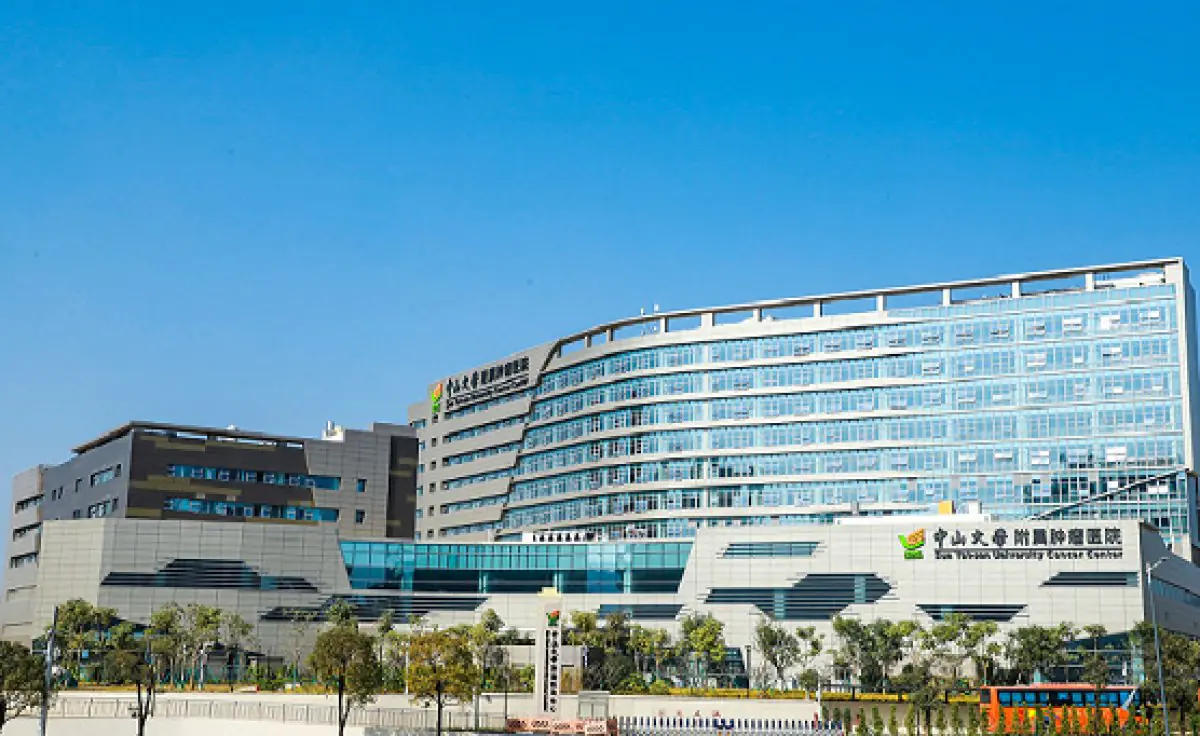

Sun Yat-sen University Cancer Center (SYSUCC)でのがん検診
クリニックについて
中山大学腫瘍防治中心(SYSUCC)は、中国広州市にある大学病院です。中国最大級の統合がんセンターの一つであり、35の臨床診療科で成人および小児の治療を行っています。主な専門分野は、腫瘍内科、放射線腫瘍科、脳神経外科です。脳神経外科チームは年間約1,400件の手術を行っています。
当センターは1964年に腫瘍専門病院として開設されました。2023年には184万人以上の外来患者を受け入れ、同年に4万5,000件以上の手術を実施しました。SYSUCCは2つのキャンパスを運営し、2,247床の病床と42室の手術室を備えています。2012年よりUICC(国際対がん連合)の会員です。
当病院では、低侵襲手術のために4台のda Vinciロボットを導入しています。その他の技術には、サイバーナイフや陽子線治療があります。SYSUCCは、中国の病院として初めてデジタル病理学を導入した病院の一つです。また、放射性核種の製造および核医学専用のユニットも備えています。国際的な患者様には、専門の国際医療センターを通じてサポートを提供しています。
ハイライト
無料相談を受ける


 クリニックが新規リクエストを受け付けていません
 平均回答時間 — 5分
クリニックでの治療料金
| 治療 | 料金 | |
|---|---|---|
| リンパ腫化学療法 | お問い合わせください | |
| 定位放射線治療 | お問い合わせください | |
| 放射線治療 | お問い合わせください | |
| 放射線治療 | お問い合わせください | |
| 腎臓癌に対する凍結療法 | お問い合わせください | |
| 腹腔内温熱化学療法 | お問い合わせください | |
| 乳房切除術 | お問い合わせください | |
| 化学療法 | お問い合わせください | |
| 小線源治療 | お問い合わせください | |
| 高密度焦点式超音波焼灼術 | お問い合わせください | |
| 陽子線治療 | お問い合わせください | |
| 大網切除術 | お問い合わせください | |
| 大腸癌切除術 | お問い合わせください | |
| 肝がん切除術 | お問い合わせください | |
| 脳腫瘍摘出術 | お問い合わせください | |
| 遠位膵切除術 | お問い合わせください | |
| 髄膜腫摘出術 | お問い合わせください | |
| 頭蓋底腫瘍摘出術 | お問い合わせください | |
| 大腸癌に対する放射線療法 | お問い合わせください | |
| 脳腫瘍に対する放射線療法 | お問い合わせください | |
| サイバーナイフ治療 | お問い合わせください | |
| 肝臓癌の化学療法 | お問い合わせください | |
| 肝動脈化学塞栓療法 | お問い合わせください | |
| 喉頭癌手術 | お問い合わせください | |
| 肺癌化学療法 | お問い合わせください | |
| 膵臓がん化学療法 | お問い合わせください | |
| 胃癌化学療法 | お問い合わせください | |
| 胃切除術 | お問い合わせください |
調子はいかがですか?
病院品質認定3件
Sun Yat-sen University Cancer Center (SYSUCC): 詳細情報 クリニックについて
中山大学腫瘍防治中心(SYSUCC)は、大学付属のがん専門病院です。1964年に設立され、中国で最も歴史のある腫瘍専門センターの一つです。広州市の越秀区と黄埔区にある2つのキャンパスで運営されており、天河区に第3キャンパスを計画中です。
認定と臨床実績
当センターは2012年よりUICC会員です。1994年には三級甲等病院(Tertiary Class A Hospital)として認定されました。当病院には、中国南部の腫瘍学に関する国家重点実験室が設置されています。放射線治療科および一般外科は、国家臨床専門分野としての地位を保持しています。
SYSUCCは非常に多くの患者を受け入れています。2023年には、184万人以上の外来患者と18万5,408人の入院患者を記録しました。外科チームは同年に4万5,492件の手術を実施しました。
腫瘍学の専門分野と治療法
当センターには、がんの包括的なケアに重点を置いた35の臨床診療科があります。予防やスクリーニングから、高度な外科的・内科的治療まで幅広く対応しています。
脳神経外科と脳腫瘍ケア
脳神経外科では、中枢神経系の良性および悪性腫瘍を治療しています。チームには13人の脳神経外科医と専門の神経腫瘍医が在籍しており、年間2,000人以上の新しい脳腫瘍患者を診察しています。主な治療対象:
- 神経膠腫(グリオーマ)および髄膜腫
- 下垂体腫瘍および頭蓋底腫瘍
- 小児脳腫瘍
- 転移性脳腫瘍
チームは年間約1,400件の脳神経外科手術を行っています。サイバーナイフによる放射線外科手術や陽子線治療も利用可能で、複雑な脳構造に対して精密な放射線照射が可能です。
血液腫瘍内科
血液内科は血液がんを専門としています。これらの疾患に対する化学療法ユニットの草分け的存在です。専門医は、リンパ腫や白血病に対してCAR-T細胞免疫療法を提供しています。この療法は、患者自身の免疫細胞を利用してがんを攻撃します。
リンパ腫に対しては、自家幹細胞移植を併用した大量化学療法を提供しており、集中的な治療後に健康な血液細胞を回復させます。ホジキンリンパ腫および非ホジキンリンパ腫のサブタイプを治療しています。
泌尿器科および泌尿生殖器外科
泌尿器科は、泌尿器系および生殖器系のがんに焦点を当てています。外科医は、前立腺および腎臓の手術にda Vinciロボットシステムを使用しています。ロボット技術により、開腹手術よりも小さな切開で、より高い精度を実現しています。対象疾患:
- 膀胱がんおよび前立腺がん
- 腎腫瘍および副腎腫瘍
- 精巣がんおよび陰茎がん
- 尿管および尿道腫瘍
また、低侵襲な腹腔鏡下手術も実施しており、可能な限り臓器機能を温存しながら腫瘍を管理します。
診断および治療技術
当センターは42室の手術室と2,247床の病床を運営しています。中国のがん専門病院として初めてデジタル病理学を導入した病院の一つであり、診断のための組織分析の精度を向上させています。
核医学科では、腫瘍の病期診断のためにPET/CTおよびSPECT画像診断を提供しています。治療用の放射性核種を自社で製造しており、2つのキャンパス全体で4台のda Vinciロボットが稼働しています。
専門的な診断機器には、ガリウム68およびフルオロミソニダゾールトレーサーを用いたPET-CTが含まれます。これらは特定の腫瘍タイプや生物学的特性を特定するのに役立ちます。また、集束超音波で腫瘍を破壊する非侵襲的なHIFUアブレーションも使用しています。
国際患者サービス
国際医療センターは、外国人患者様をサポートしています。チームは、国際基準に準拠した診断および治療計画を調整します。サービスは中国への到着前から開始されます:
- 到着前の治療計画
- 中国語から英語への医療ファイルの翻訳
- フルサイクル健康管理
- 日々の治療調整
当部門は、国際的な患者様と臨床チームとの間で継続的なケアを維持しています。
追加サービス
651 Dongfeng East Road, Yuexiu District, Guangzhou 510060, P. R. China

無料相談を受ける
クリニックが新規リクエストを受け付けていません
平均回答時間 — 5分
仕組み:
- 該当分野に精通した医療コーディネーターを見つけます
- ステップバイステップガイドと費用見積もりを含む個人向けオファーをご提供いたします
- 予約スケジューリングと航空券予約を含むご旅行を手配いたします
- 病院にご到着後、24時間体制でサポートいたします