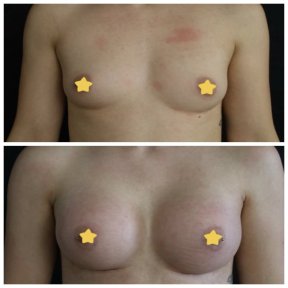
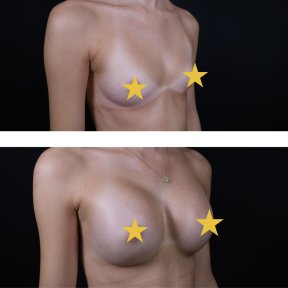
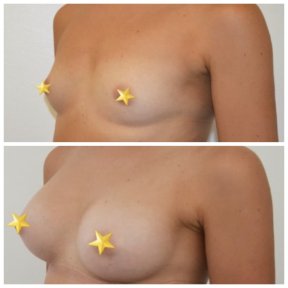
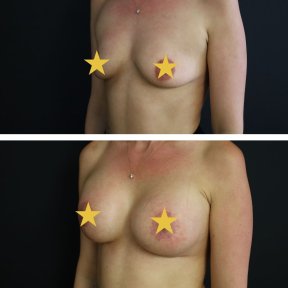
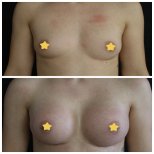
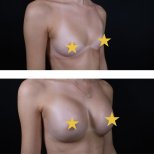
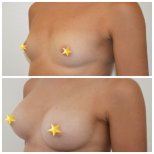
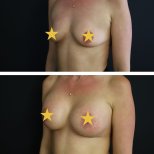
- 技法:インプラントを使用しない基本的な豊胸術。
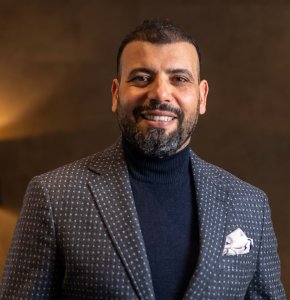
- ワリド・エルジャブ医師は、形成美容外科、手の外科、および外傷外科の3つの専門医資格を保有しており、高度な解剖学的専門知識を提供いたします。
- エステティック・デュ・ノール クリニックはエルジャブ医師が院長を務めており、スウェーデンおよびトルコの主要機関にて美容医療の研鑽を積まれております。
- 費用に含まれるもの:形成外科医による診察。
- 入院に関する情報:個室にて1日間のご入院;ホテルでのご宿泊は費用に含まれておりません。
| ドイツ | トルコ | アメリカ | |
| 豊胸術 | から $4,500 | から $3,692 | から $6,500 |
| 豊胸術 | から $6,000 | から $3,500 | から $8,000 |
| 豊胸手術 | から $8,500 | から $3,500 | から $11,000 |
| 脂肪注入豊胸術 | から $8,000 | から $4,410 | から $9,500 |
| 乳房増大術(ティアドロップインプラント) | から $6,500 | から $4,979 | から $8,500 |
Bookimedは豊胸術価格に追加料金を加算しません。料金はクリニックの公式価格表から来ています。到着時にクリニックで豊胸術代を直接お支払いいただきます。
Bookimedはお客様の安全に取り組んでいます。豊胸術で高い国際基準を維持し、世界中の国際患者サービスに必要なライセンスを有する医療機関とのみ協力しています。
Bookimedは無料専門サポートを提供します。専属医療コーディネーターが治療前、治療中、治療後にサポートし、あらゆる問題を解決します。豊胸術の旅路でお一人になることはありません。
1日目:到着
2日目:術前
3日目:手術
4日目:術後
第1週:リハビリテーション
第2〜4週:リハビリテーション
第4〜6週:リハビリテーション
第12週:リハビリテーション
各患者様の状態は個人により異なり、回復期間にも差がある場合がございます。
Dr. Walid Eljabu is triple board-certified in Plastic and Aesthetic Surgery, Hand Surgery, and Trauma Surgery. He has extensive experience in reconstructive and microsurgery. He trained in the UK and Germany, with additional specialist training in Sweden and Turkey. He is the CEO and Head Surgeon at Esthétique du Nord in Hamburg.
He specializes in facial rejuvenation (facelift, rhinoplasty), breast surgery, and body contouring. This includes inverse abdominoplasty.
Accreditation: MRCSEd (Royal College of Surgeons of Edinburgh). Memberships: Rhinoplasty Society of Europe; International Society of Aesthetic Plastic Surgery; German Society of Plastic, Reconstructive and Aesthetic Surgery; American Society of Plastic Surgeons; Royal College of Surgeons of Edinburgh; American Society for Surgery of the Hand; German Society of Hand Surgeons.
マヌエラ・ザイフェルト医師は、ゾーリンゲン・クリニックの乳がんセンターを率い、乳房温存手術および審美的再建を専門としています。
この医師はドイツで著名な乳房専門医であり、West German Study Group Breast Cancer、German International Medical Center、European Academy of Senologyを設立したことで知られています。この医師は乳房疾患、低侵襲の乳がん治療、乳房再建を専門としており、21,000人以上の乳がん患者を治療してきました。
1996年以来、この医師はデュッセルドルフのルイゼンクランケンハウ大学病院の乳房センターを率いています。この医師はハインリッヒ・ハイネ大学で一般医学の学位を取得し、腫瘍学の専門分野を持っています。
ドイツ連邦共和国功労勲章を授与され、この医師はデュッセルドルフ乳がん会議を組織したことでも知られています。
German plastic surgeons primarily use inframammary incisions and dual-plane implant placement to ensure natural results. The inframammary approach offers precise surgical access, while dual-plane placement combines submuscular and subglandular techniques to optimize tissue coverage and minimize visible implant edges.
Bookimed Expert Insight: German clinics like Esthétique du Nord in Hamburg often utilize B-Lite lightweight implants paired with microsurgical techniques. This combination is a strategic choice for patients seeking long-term stability, as lighter implants reduce tissue sag over time compared to traditional silicone options.
Patient Consensus: Patients frequently report that the inframammary scar becomes nearly invisible within the breast fold. Most emphasize that consultations focus heavily on achieving a conservative, natural shape rather than dramatic volume.
German health insurance generally excludes breast augmentation unless you document a physical medical necessity. Public and private insurers categorize purely cosmetic procedures as elective. You may secure coverage for reconstruction after cancer, severe congenital deformities like tubular breasts, or documented gender-affirming care transitions.
Bookimed Expert Insight: Documentation wording is the deciding factor for German insurers. Using terms like reconstruction or correction of deformity rather than cosmetic enhancement significantly improves approval odds. Clinics like Esthétique du Nord in Hamburg provide detailed consultations that help clarify if your specific case meets these strict physical criteria.
Patient Consensus: Many patients find that obtaining pre-authorization is the only way to avoid full out-of-pocket costs. Most successful cases rely on a surgeon's official medical report detailing a physical anomaly rather than emotional suffering.
Recovery after breast augmentation in Germany typically includes a 1 day hospital stay for monitoring. Most patients return to light work within 7 to 14 days, while physical activities and heavy lifting are restricted for 6 weeks to ensure proper tissue healing and implant positioning.
Bookimed Expert Insight: While basic packages focus on the surgery, premium options in Germany often include a 3 to 7 day 5-star hotel stay. This is strategic because local surgeons, like triple board-certified Dr. Walid Eljabu, prefer patients to remain nearby during the critical first week for immediate follow-up if needed.
Patient Consensus: Patients find the first week most challenging due to limited arm mobility and sleep discomfort. Many emphasize that while you may look recovered early on, the mental patience required for internal healing is often underestimated.
Verifying a surgeon in Germany requires checking regional medical chambers called Landesärztekammer. Since Germany lacks a central national registry, you must use state-specific Arzt-Suche directories to confirm an active license (Approbation) and Facharzt specialist designation in plastic and aesthetic surgery.
Bookimed Expert Insight: German surgeons often hold multiple certifications across different countries. For instance, Dr. Walid Eljabu at Esthétique du Nord is triple board-certified in plastic, hand, and trauma surgery with credentials from the Royal College of Surgeons of Edinburgh. Checking for international memberships like ISAPS or ASPS alongside German registration provides an extra layer of quality assurance.
Patient Consensus: Patients emphasize looking for a board-certified plastic surgeon rather than a cosmetic doctor. They recommend asking for specific annual caseload numbers and confirming the surgeon personally handles any potential follow-up care.
You can safely undergo breast cancer screenings and breastfeed after augmentation in Germany. Surgeons prioritize submuscular placement and inframammary incisions to keep milk ducts and nerves intact. Modern German facilities use specialized displacement mammography and high-precision ultrasound to ensure implants do not compromise diagnostic accuracy.
Bookimed Expert Insight: While many focus on silicone versus saline, the incision site is actually the critical factor for future nursing. Data suggests that choosing a surgeon like Dr. Walid Eljabu at Esthétique du Nord, who specializes in advanced microsurgical techniques, reduces the risk of nerve damage that can impact milk let-down.
Patient Consensus: Individuals emphasize that while breastfeeding usually succeeds, you must alert mammogram technicians about implants beforehand. Some patients also recommend regular self-exams, noting that any new lumps or changes require immediate clinical evaluation.
Germany permits cohesive silicone gel and sterile saline implants as the only primary materials for breast augmentation. These devices are strictly regulated as CE Class III medical items under the European Medical Device Regulation. The Federal Institute for Drugs and Medical Devices monitors all permitted variants for safety.
Bookimed Expert Insight: German clinics like Esthétique du Nord in Hamburg often prioritize premium B-lite implants, which are up to 30% lighter than traditional silicone. This focus on advanced technology aligns with German surgeons’ preference for long-term tissue health and reduced strain on breast ligaments.
Patient Consensus: Patients prioritize cohesive silicone gel for its natural feel and often ask for specific documentation like the official European Implant Passport. There is a strong preference for smooth surfaces to minimize long-term inflammation risks.
Breast implants do not require automatic replacement after 10 years. While not lifetime devices, the decade mark is a monitoring milestone rather than an expiration date. Modern silicone and saline shells often remain structurally sound for 15 to 20 years without medical intervention or complications.
Bookimed Expert Insight: German clinics like Esthétique du Nord often utilize lightweight B-lite implants, which reduce long-term tissue sagging compared to standard silicone. Choosing advanced materials or non-implant fat transfer, which averages $8,000 in Germany, can eliminate the need for future implant-related revision surgeries entirely.
Patient Consensus: Many patients regret believing the 10-year myth and wish they knew implants often last much longer. They emphasize choosing surgeons who provide clear, long-term follow-up plans to monitor for silent ruptures.
Breast augmentation incisions in Germany are typically placed in the inframammary fold or around the areolar edge to minimize visibility. Surgeons like Dr. Walid Eljabu use advanced techniques to ensure scars settle into natural skin creases, typically fading into thin, faint lines within 6 to 12 months after surgery.
Bookimed Expert Insight: While many focus on scar location, the choice of implant often dictates the incision length. Packages at Esthétique du Nord featuring B-Lite lightweight implants are popular because these implants can sometimes be inserted through slightly smaller, more refined incisions than traditional silicone, potentially reducing the final scar footprint.
Patient Consensus: Patients emphasize that the inframammary approach is the most discreet option for most body types. While scars appear red initially, they consistently report that the lines become nearly invisible once they reach the one-year mark.
Choosing implant placement depends on your anatomy and desired look. Under the muscle placement provides natural results and reduces visible rippling for thin patients. Over the muscle placement offers a faster recovery and is ideal for women with sufficient natural tissue or active lifestyles.
Bookimed Expert Insight: German surgeons like Walid Eljabu at Esthétique du Nord carry rare triple board certifications. This anatomical expertise is crucial when navigating complex dual-plane placements. We see many patients choosing Germany specifically for this high level of surgical precision and microsurgical background.
Recovery from breast augmentation in Germany typically requires 6 to 8 weeks for structural healing, with final aesthetic settling taking 12 months. Patients usually resume desk work within 5 to 7 days, though German surgeons strictly prohibit driving for 14 days and heavy lifting for 6 weeks.
Bookimed Expert Insight: German clinics like Esthétique du Nord often prioritize premium B-Lite implants, which are 30% lighter than standard silicone. This weight reduction can positively impact long-term recovery by reducing strain on breast tissue and potentially slowing natural sagging over time.
Patient Consensus: Many find the first 3 to 7 days surprisingly difficult for basic tasks like bathing or dressing. They recommend planning for help at home as limited arm mobility is standard during the first week.
Modern breast implants do not require automatic replacement every 10 years. While the FDA labels them as non-lifetime devices, high-quality silicone and saline implants frequently last 20 years or longer. Revision is only necessary if medical complications arise or you desire an aesthetic change in size or shape.
Bookimed Expert Insight: German clinics like Esthétique du Nord often utilize B-Lite lightweight implants to reduce long-term tissue strain. Our data shows that high-volume centers led by triple board-certified surgeons like Dr. Walid Eljabu focus on advanced microsurgical techniques. This precision helps minimize early scar tissue formation, which is a primary reason for premature implant replacement.
Patient Consensus: Many patients report their implants remaining intact and comfortable well beyond the 10-year mark. The prevailing sentiment highlights that monitoring through regular imaging is more vital than a fixed surgical deadline.