ホームページへ
4.6/5
TrustPilot

イタリアで最高の鼻中隔湾曲症医師 - トップ1名の医師

イタリアのトップ鼻中隔湾曲症医師と価格を比較。こちらで最適なマッチングを見つけてください

イタリアの3名のトップ専門家から見積もりを取得

ご要望と予算に基づいて最適な医師を厳選いたします

トップ医師

1

イタリア

レビュー

14000+

実際の患者より

個別化された治療計画を無料で取得し、最良のオプションを選択してください。コミットメント不要 · サービス料金なし

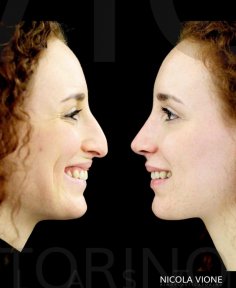
Before and after rhinoplasty results at Santa Caterina da Siena, nose reshaping improvement
Nicola Vione

Nicola Vione

29年の経験
クリニックは認証済み
Patient choice in Neurology
Best service for patients
所在地: イタリア, トリノ
クリニック:Santa Caterina da Siena

Dr. Nicola Vione specializes in Otorhinolaryngology and Head and Neck Pathology.

He began his training at the University of Turin where, in 1996 he obtained a degree in Medicine and Surgery, and in 1997 the qualification to practice. Subsequently, in 2001 he obtained the specialist diploma in Otorhinolaryngology and Head and Neck Pathology. 

Over the years of his career he has attended various prestigious hospitals, perfecting himself in Functional and Aesthetic Surgery of the nose, performing thousands of operations and obtaining excellent results. He regularly attends specialization courses and national and international congresses, learning the most avant-garde techniques of the moment such as preservation rhinoplasty which allows primary rhinoplasty operations to be performed, guaranteeing respect for the anatomy of the nose and obtaining extremely natural and a shorter post-operative period.

Since 2015, he has been collaborating with the "Micheli-Pellegrini" Study Center, one of the most prestigious schools in Italy of rhino-cervical-facial reconstructive surgery, as a member of the scientific committee and as a Professor of Functional and Aesthetic Surgery of the Nose. He currently works at the San Luigi Gonzaga public hospital in Orbassano (Turin), as Medical Director of the Otolaryngology Operative Unit. He also works in some private clinics, such as Santa Caterina da Siena GVM and the Fornaca Clinic in Sessant.

Dr Vione is a member of numerous national scientific societies such as AICEFF (Italian Association of Aesthetic and Functional Surgery of the Face), AOOI (Association of Italian Hospital Otorhinolaryngologists), AIOCC (Italian Association of Head and Neck Oncology) and SIOeChCF ( Italian Society of Otolaryngology and Head and Neck Surgery). Registered, since 1997, in the Provincial Order of Surgeons of Asti

Dr. Nicola Vione is an established professional in the field of Otolaryngology and particularly expert in Functional and Aesthetic Surgery of the nose.

診察お問い合わせください

海外のクリニックを選ぶことはストレスフルです。800,000名以上の患者をサポートしたBookimedは、お客様の懸念を理解しています。信頼できる医師、最高の価格品質オプション、複雑なケースの解決策を見つける方法を知っています。すべての段階でお客様をご案内いたします。

ヤン・マツィイフスキー

医療コーディネーターチーム責任者

4300+件以上の患者の旅をガイド

Bookimedで3

Italyの294名の患者が今月当社を通じて医師を見つけました

完璧な医師マッチングを取得する方法

1

2分のクイズ

目標、予算、スケジュールをお聞かせください

2

人間のマッチング + AI

アルゴリズムがマッチングを見つけ、コーディネーターが適合性を確認します

3

オプション準備完了

価格、パッケージ、日程を比較。コーディネーターとチャット

選択肢に迷っていますか?

専属の Bookimedコーディネーターがお客様のニーズに合わせた完璧な外科医を見つけるお手伝いをします

  • すべての段階で24時間365日サポート
  • 医師とのマッチングサポートとクリニックとの全てのコミュニケーションを処理
  • 旅行、宿泊、送迎を調整します

治療をガイド

医療訓練を受けた専属コーディネーター

Peguy Beaugris
Tetyana Hyrych
Zekra Eldeeb
Victoria Olayinka
Iryna Sydorchuk
Tetiana Ihnatiuk

適切な医師とクリニックの選び方:内部者のヒント

医師やクリニックを選ぶ際は、これらの重要なポイントを覚えておいてください:
資格を確認
ISAPS、JCI、または関連医学会などの機関からの認証を確認してください
成功率を確認
お客様の特定治療に豊富な経験と実績のある医師をお選びください
患者レビューを読む
実際の患者様のBookimedレビューをご覧になり、体験について学んでください
効果的なコミュニケーションの確保
円滑な治療のため言語サポートを提供するクリニックを選んでください。
サービスについて質問
隠れた費用を避けるため、価格に宿泊、現地送迎、アフターケアなどのサービスが含まれているかご確認ください

Bookimed洞察:イタリアのトップ鼻中隔湾曲症専門家(2026)

Bookimedはイタリアの鼻中隔湾曲症治療リクエスト9件を調整し、1名のトップ評価専門家と協力しています。この表の医師は国際的資格、臨床専門知識、患者の結果に基づいて選ばれています。2026年ランキングは実際の患者ケースとパートナークリニックの現行プログラムからの検証済みデータを使用して形成されています
順位医師経験適合する方特色クリニックと所在地診察

FAQ

これらのFAQはBookimedを通じて医療支援を求める実際の患者からのものです。回答は経験豊富な医療コーディネーターと信頼できるクリニック代表者が行います。

Who is a good candidate for septoplasty in Italy?

Good candidates for septoplasty in Italy include adults with chronic nasal obstruction caused by a deviated septum. Qualifying patients typically experience persistent mouth breathing or recurrent sinus infections. Italian specialists require that facial growth is fully complete. This usually occurs by age 16 for girls and 18 for boys.

  • Obstruction severity: Candidates often have over 50% nasal blockage confirmed by imaging scans.
  • Treatment history: Surgery is recommended after 3 to 6 months of unsuccessful medical therapy.
  • Secondary symptoms: Recurring nosebleeds or sleep disturbances like snoring often indicate surgical necessity.
  • Physical health: Ideal candidates are non-smokers to ensure optimal healing of the nasal mucosa.

Bookimed Expert Insight: Italian surgical centers like La Madonnina Clinic and Ospedale San Carlo di Nancy manage high patient volumes. This density allows surgeons like Dr. Nicola Vione to refine specialized preservation techniques. These approaches focus on maintaining nasal structural integrity. This often results in more natural outcomes and faster recovery than traditional methods.

Patient Consensus: Patients emphasize first checking if allergies cause the blockage before committing to surgery. Those with a fully blocked nostril report that private clinics provide much faster relief than the long public wait times.

What surgical technique is routinely used in Italy and are visible scars created?

Italian specialists routinely treat a deviated septum using endoscopic septoplasty. This advanced approach involves internal incisions with no external skin cuts. Most patients experience zero visible scarring. Surgeons use specialized endoscopes to ensure high precision while preserving the nose structural integrity.

  • Surgical approach: Endoscopic techniques allow surgeons to work entirely through the nostrils.
  • Incision placement: Internal placement of stitches ensures any scars remain completely invisible.
  • Functional focuses: Italian centers often combine septoplasty with turbinate reduction for better airflow.
  • Recovery timeline: Internal incisions typically heal fully within approximately 2 weeks.

Bookimed Expert Insight: Italian clinics like La Madonnina in Milan demonstrate a high focus on aesthetic-functional synergy. Doctors like Dr. Nicola Vione emphasize preservation rhinoplasty techniques. This focus ensures that functional repairs do not change the nose shape unless requested. High-volume centers in Rome and Milan provide access to specialists who have performed thousands of these internal procedures.

Patient Consensus: Patients note that choosing an endoscopic approach resulted in no visible marks and a smooth recovery. They highlight the importance of asking if turbinoplasty is bundled, as this is a common practice in Italy.

Are stitches placed inside the nose after surgery and do they need to be removed?

Surgeons place internal stitches during septoplasty to secure the septum and close incisions. Most internal sutures are absorbable and dissolve naturally within 1 to 4 weeks. External stitches used in open procedures require professional removal by a surgeon, typically within 7 days.

  • Absorbable sutures: These internal stitches break down naturally and do not require removal.
  • Dissolving timeframe: Internal material typically disappears within 7 to 28 days of healing.
  • External removal: Non-dissolvable stitches on the columella are usually removed within 1 week.
  • Splint fixation: A single temporary stitch may hold plastic splints until their scheduled removal.

Bookimed Expert Insight: Italian specialists like Dr. Nicola Vione emphasize preservation techniques to shorten recovery and minimize surgical trauma. Leading facilities in Rome and Milan, including Ospedale San Carlo di Nancy and La Madonnina, prioritize these minimally invasive approaches. Patients should note that high-volume centers in Italy often use specific biodegradable materials that reduce post-operative irritation compared to standard sutures.

Patient Consensus: Patients often worry when seeing white or yellowish material inside the nose after surgery. This is typically just the dissolving suture material rather than a sign of infection.

How long do I need to stay in Italy for safe surgery and the first follow-up?

For a deviated septum treatment in Italy, patients typically require a 7 to 10 day stay. This timeframe ensures safety during the first critical days and covers the initial post-operative follow-up. Surgeons usually perform the first check 3 to 7 days after the procedure.

  • Hospital stay: Most patients spend 1 night in the clinic for monitoring.
  • Packing removal: Surgeons typically remove nasal packing 24 to 48 hours after surgery.
  • First follow-up: The primary clinical check occurs between day 3 and day 7.
  • Travel clearance: Patients are generally fit to fly 7 to 10 days post-operation.

Bookimed Expert Insight: Italian clinics like Ospedale San Carlo di Nancy and La Madonnina focus on large-scale patient volumes. Dr. Nicola Vione has performed thousands of nose operations using advanced functional techniques. We see that high-volume Italian specialists often provide flexible remote follow-ups after the first face-to-face visit.

Patient Consensus: Patients note that nasal congestion and swelling peak around day 5. They emphasize staying local for at least a week to manage initial pressure changes before flying home.

When can I resume sport, glasses, and return to work?

Recovery from septoplasty in Italy typically allows a return to desk work within 7 days. Patients should avoid wearing glasses directly on the nasal bridge for 1 to 2 weeks. Aerobic exercise and sports generally require 4 to 6 weeks of rest to ensure stable healing.

  • Return to work: Resume non-physical tasks in 3 to 7 days.
  • Eyewear restrictions: Avoid nasal bridge pressure for 14 days.
  • Physical activity: Light walking is safe after 1 week.
  • Strenuous sports: Wait 4 to 6 weeks for full clearance.

Bookimed Expert Insight: FIFA-accredited facilities like Clinic Villa Stuart specialize in accelerated rehabilitation for elite athletes. While general patients wait 6 weeks for sports, these specialized centers use protocols that may allow light training sooner. Some Italian experts like Dr. Nicola Vione perform thousands of procedures using preservation techniques designed to minimize tissue trauma during recovery.

Patient Consensus: Patients note it is important to tape glasses to your forehead or switch to contacts early on. They warn that rushing back to the gym before 4 weeks can cause bleeding.

Which post-op instructions minimise bleeding and speed recovery?

Post-operative care for a deviated septum includes sleeping at 45 degrees to use gravity against bleeding. Avoid nose blowing for 14 days and refrain from heavy lifting. Italian specialists like Dr. Nicola Vione use preservation techniques to shorten recovery and minimize surgical trauma.

  • Elevation: Propping your head 45–60 degrees reduces blood pressure and bleeding duration.
  • Physical limits: Avoiding items over 5kg and bending prevents sudden nasal pressure spikes.
  • Heat avoidance: Skipping hot showers, saunas, and espresso prevents blood vessel dilation.
  • Hydration: Drinking 3 liters of water daily helps flush anesthesia and clear clots.
  • Saline rinses: Starting rinses after 48 hours helps clear crusting twice as fast.

Bookimed Expert Insight: Italian clinics like La Madonnina and Ospedale San Carlo provide specialized environments for recovery. Specialists in Italy often focus on preservation rhinoplasty protocols. This approach reduces tissue damage compared to traditional methods. Experience matters, as doctors like Dr. Nicola Vione perform thousands of successful nose operations. Seeking specialized surgeons can reduce the standard recovery time to around 10 days.

Patient Consensus: Patients emphasize that sneezing with an open mouth is vital to avoid bleeding. Many find that using a cool-mist humidifier prevents painful nasal crusting during the first week.

What documentation should I bring to Italy and do I need additional certificates if I have travel insurance?

Travelers to Italy for deviated septum treatment must present a valid passport with 3-6 months validity. Essential documentation includes proof of onward travel and clinical accommodation. While travel insurance is proactive, you still need a specific visa letter or confirmation of coverage document from your insurer.

  • Travel authorization: ETIAS pre-travel authorization is expected for visa-exempt citizens by late 2026.
  • Schengen requirements: Visa applicants must prove minimum medical coverage of €30,000 including repatriation fees.
  • Medical necessity: Bring an apostilled doctor's note to confirm the septoplasty is non-cosmetic.
  • Clinical records: Clinics require detailed CT scans and ENT specialist letters beyond insurance summaries.

Bookimed Expert Insight: Italian clinics like La Madonnina or Ospedale San Carlo di Nancy handle high patient volumes. Our data shows that top surgeons like Dr. Nicola Vione often hold academic roles. Patients should prepare physical paper copies of all medical records. Italian facilities frequently prefer physical documents over digital apps for admission and insurance verification.

Patient Consensus: Patients note that email correspondence with the clinic should start 6 weeks early. They emphasize that standard travel insurance rarely covers elective surgery without a specific medical necessity waiver.




