Nordwest Clinic (Krankenhaus)
ドイツにおけるCAR T細胞療法とは?
CAR T細胞療法は、キメラ抗原受容体(CAR)を用いた、特定の癌(主にリンパ腫や白血病などの血液癌)に対する先進的な治療法です。この療法では、キメラ抗原受容体を使用して患者自身のT細胞を再プログラムし、腫瘍細胞を特異的に標的として攻撃させます。
これは、患者のT細胞(免疫細胞)を改変して癌細胞を標的とし、破壊するものです。これにより、癌と戦う身体の能力がより効果的に向上します。
💡 CAR T細胞療法の主な目的は、特に従来の治療法に反応しなかった癌に対して、身体の免疫反応を強化することです。
❕ CAR T細胞療法は、進行性の血液癌、特に化学療法や放射線療法が奏効しなかった場合や、癌が再発した場合に最も効果的です。

どのような癌治療法がありますか?
化学療法や放射線療法のような従来型の癌治療は、急速に増殖するすべての細胞を標的とするため、免疫抑制や重大な副作用を引き起こすことがよくあります。
CAR T細胞療法は、高度な技術を用いて患者のT細胞を改変し、より効果的に癌細胞を標的として攻撃する革新的な治療法です。
✅ 外科手術とは異なり、CAR T細胞療法は低侵襲です。患者からT細胞を採取し、体外で改変した後、手術を行わずに体内に戻すというプロセスです。
💡通常、化学療法に抵抗性のある血液癌や、以前の治療後に再発した癌に使用されます。
CAR T細胞療法と他の治療法の比較
CAR T細胞療法は、化学療法や放射線療法とはアプローチが異なります。これらの方法が一般的に免疫系を抑制するのに対し、CAR T細胞療法は免疫系を強化して癌細胞を特異的に標的とします。
ドイツでCAR T細胞療法の対象となるのはどのような患者ですか?
CAR T細胞療法は通常、リンパ腫や白血病などの血液癌、特に癌が再発した患者や化学療法に抵抗性のある患者に推奨されます。また、リンパ節癌、特にB細胞非ホジキンリンパ腫のような進行性の免疫系腫瘍の治療にも使用されます。
👉ZUMA-1試験では、進行性のびまん性大細胞型B細胞リンパ腫の患者において有望な結果が示され、82%が治療に良好な反応を示し、54%が完全寛解を達成しました。一部の患者では長期寛解が見られましたが、生存期間にはばらつきがありました。
✅B細胞悪性腫瘍の患者に有効(進行性のリンパ腫を含む)。
❗ 推奨されない患者:心臓病や肺疾患などの重篤な既往症がある患者。
CAR T細胞療法はどのように行われますか?

-
準備:
-
血液検査、画像診断、および場合によってはT細胞改変に向けた身体の準備として化学療法が行われます。
-
手順:
-
患者からT細胞を採取します。
-
細胞は研究室で改変され、癌と戦う特性が強化された後、患者の体内に戻されます。
-
改変されたT細胞が患者に点滴注入されます。
🕒 期間:通常、細胞採取から再注入まで2〜3週間かかります。
回復までどのくらいかかりますか?
| 1〜2週間 | サイトカイン放出症候群や感染症などの副作用がないか病院でモニタリング。 |
| 3〜4週間 | 軽度の疲労感が残る場合があるが、通常の活動に戻る。 |
| 1〜6ヶ月 | 完全な回復には数ヶ月かかる場合があり、定期的なフォローアップ診察と激しい活動への制限がある。 |
リスクと合併症は何ですか?
CAR T細胞療法は、ほとんどの患者にとって通常安全です。しかし、免疫系の細胞を改変する他の治療法と同様に、いくつかのリスクを伴います。
💡 一般的な副作用には、発熱、疲労、低血圧などがあります。
❗ 稀な合併症には、神経学的問題やサイトカイン放出症候群(免疫系の過剰反応)があります。
✅ リスクを軽減し、最善のケアを確保するために、Bookimedを通じて認定された経験豊富な治療センターを選択してください。
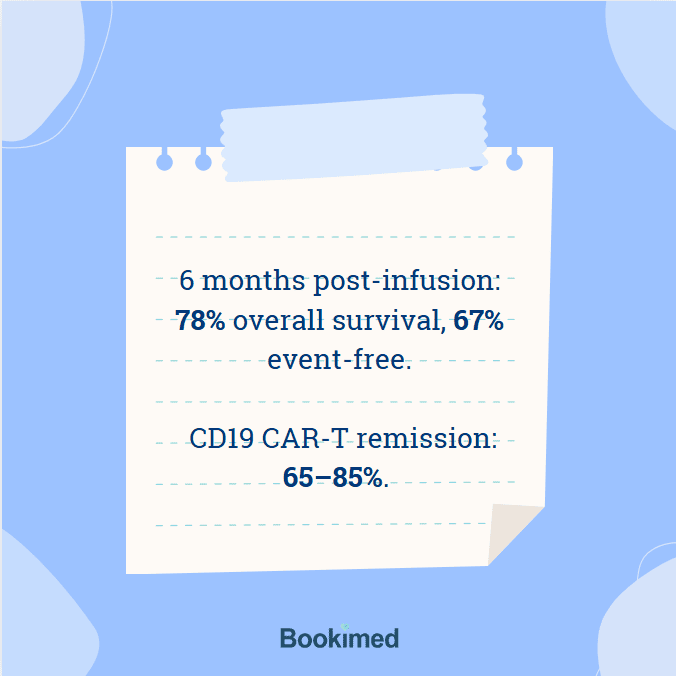
👉ある研究によると、78%の患者が注入後6ヶ月時点で生存しており、67%には主要な疾患関連イベントがありませんでした。CD19を標的とするCAR療法では、寛解率は65%から85%の間で変動し、長期生存率は治療の種類に依存します。例えば、ある療法では5年生存率が55%でした。
結果:効果はいつ期待できますか?
CAR T細胞療法の目に見える結果は、1〜2ヶ月以内に確認できます。
💡 完全寛解には時間がかかる場合があり、望ましい結果を得るために2回目の治療が必要な患者もいます。
治療の有効性は数ヶ月から数年続く可能性がありますが、一部の患者では再発する可能性があります。
なぜドイツでCAR T細胞療法を選ぶのですか?
ドイツは、最先端の医療と競争力のある価格設定により、CAR T細胞療法の主要な目的地です。ドイツは医療ツーリズムのトップ国の一つになりつつあります。この業界は、2025年の72億ドルから2035年までに173億ドルに成長すると予測されています。
-
コスト削減。ドイツでのCAR T細胞療法は、米国や英国の治療と比較して最大40%の節約が可能です。
-
認定施設。多くのドイツのクリニックはJCIのような国際機関によって認定されており、世界クラスの基準を保証しています。
-
先進技術。ドイツの病院では、CAR T細胞療法を強化するためにCRISPRのような最先端の遺伝子編集技術を使用しています。
-
便利なアクセス。ドイツはアクセスが容易で、米国からの直行便で8〜10時間、英国からはわずか1〜2時間です。
治療経験に関する実際の患者のレビューをご覧ください。
ドイツへ渡航する前に知っておくべきことは?
- ビザ要件。ほとんどの国際的な患者は、ビザなしで最大90日間ドイツに入国できます。
- 患者は通常、治療のために2〜3週間滞在し、必要に応じてフォローアップ診察を受けます。
💳 クリニックは通常クレジットカードを受け付けていますが、具体的な支払いポリシーについてはクリニックにご確認ください。
ドイツでのCAR T細胞療法の費用はいくらですか?

ドイツでのCAR T細胞療法の費用は33万ドルから44万ドルからとなっており、費用が47万5千ドルを超える可能性がある米国よりも大幅に低くなっています。
💡 費用は、症例の複雑さやクリニックの場所によって異なる場合があります。
✅価格には通常、治療、入院、および一部のフォローアップケアが含まれます。追加費用には、渡航費、宿泊費、追加検査が含まれる場合があります。
ドイツのCAR T細胞療法パッケージには何が含まれていますか?
💚 パッケージ取引:ドイツのオールインクルーシブCAR T細胞療法パッケージは、包括的な治療計画を提供し、各サービスを個別に予約するよりも価値が高いことがよくあります。
これらのパッケージには通常以下が含まれます:
-
治療前のコンサルテーションと診断検査。
-
細胞の採取、改変、および再注入。
-
宿泊施設、およびクリニック、病院、ホテル間の送迎。
-
最大2週間の治療後モニタリング。
-
遠隔フォローアップケアとサポート。
💚詳細については、Bookimedが透明性のある価格設定を保証し、コンサルテーションからケア後のフォローアップまで、治療プロセス全体をサポートします。
参考文献
-
Cappell K. M., Kochenderfer J. N. Long-term outcomes following CAR T cell therapy: what we know so far. Nature Reviews Clinical Oncology. 2023. URL: https://doi.org/10.1038/s41571-023-00754-1 (アクセス日: 04.04.2025).
-
De Marco R. C., Monzo H. J., Ojala P. M. CAR T Cell Therapy: A Versatile Living Drug. International Journal of Molecular Sciences. 2023. Vol. 24, no. 7. P. 6300. URL: https://doi.org/10.3390/ijms24076300 (アクセス日: 04.04.2025).
-
Germany Medical Tourism Market Size & Trends 2025-2035. Market Research and Consulting | Future Market Insights, Inc. URL: https://www.futuremarketinsights.com/reports/germany-medical-tourism-market (アクセス日: 04.04.2025).