ホームページへ

仕組みについて

クリニック検索プロセスを変革し、シンプル、高速、パーソナルにしました。
いくつかの質問に回答短いクイズで胃袖状切除術の目標を共有してください。
パーソナライズオファーを取得お客様の回答に基づいて厳選された3つのクリニックがカスタマイズされた治療計画と見積もりを提供します。
最良のオプションを選択オファーを比較して最適なクリニックをお選びください。
また、以下の8軒のクリニックすべてをご覧いただけます
820К+ 2014年以降患者がサポートを受けています
50
1,500 クリニック
6K+ レビュー
3K+ 3,000名以上の資格を持つ医師

タイでの胃袖状切除術費用について今すぐご確認ください

タイでの胃袖状切除術の平均価格は$7,395 / 251,430฿、最低価格は$5,360 / 182,240฿、最高価格は$9,430 / 320,620฿です
タイトルコアメリカ
胃袖状切除術から $5,360 / 182,240฿から $3,200 / 108,800฿から $18,000 / 612,000฿
ダヴィンチ胃切除術から $10,000 / 340,000฿から $7,000 / 238,000฿から $24,000 / 816,000฿
データは2026年June月時点でBookimedにより検証され、世界218件のクリニックからの患者リクエストと公式見積もりに基づいています。中央値費用は実際の請求書(2024年-2026年)に基づいており毎月更新されます。実際の価格は異なる場合があります。

タイの最高の胃袖状切除術クリニックをご発見ください:8件の認証済み選択肢と料金

クリニックはBookimedのスマートシステムにより、5つの主要基準でのデータサイエンス分析を使用してランク付けされています。
Wansiri Hospital
ナバミン9病院内のバイタルグロウスキン&エステティッククリニック
広告
Panacee Hospital Rama 2 - Integrative Chronic Disease & Regenerative Center

Panacee Hospital Rama 2 - Integrative Chronic Disease & Regenerative Center

タイ, バンコク
クリニックは認証済み :

パナセ・メディカルセンターは、細胞レベルで身体に着目した包括的な医療を提供しています。当クリニックのアプローチは、患者様が現在の身体状態を理解し、将来の健康動向を予測するための支援を行います。また、タイ国内および海外の専門家による専門的なケアを通じ、健康管理計画のサポートも行っております。当クリニックは、薬物や化学物質による副作用を回避するため、ビタミン療法、解毒療法、最新の医療処置など多様な方法を組み合わせ、長期的な健康と若さの維持を促進します。

サービス内容:

  • 細胞療法 - パナセGMP認定細胞若返り治療
  • 非観血的整形外科治療
  • 抗加齢センター
  • 心血管プログラム - ECP(体外式カウンターパルセーション療法)
  • 解毒プログラム
  • キレーション療法
  • 肝臓デトックス
  • 結腸水治療法
  • リン脂質治療
  • 細胞保護および癌発生予防
  • 汚染対策プログラム
  • 顔面若返り治療
  • 更年期・ホルモン療法
  • 特別健康診断
  • 高度臨床検査
  • 遺伝子検査
  • 食物アレルギー検査:IgG
  • 尿中有機酸プロファイル
  • 総合健康診断プログラム
  • オゾン療法
  • 性的健康
  • QRS(量子共鳴システム)ペルビセンター
  • タイ伝統医学・医療用大麻センター
Bumrungrad International Hospital
Rattinan Clinic
Bangkok Hospital Pattaya

タイでの胃袖状切除術概要

要点
関連手術・費用
仕組みについて
メリット
お支払い
患者様が推奨 -
85%
手術時間 - 2 時間
滞在国での滞在 - 7 日
リハビリテーション - 60 日
麻酔 - 全身麻酔
処理済みリクエスト - 6652
Bookimed手数料 - $0

タイで胃袖状切除術の医学評価を受ける:その分野の最高の専門医をお選びください

すべての医師を見る
検証済み

Sarunnuch Panyavorakhunchai

13年の経験

サルンヌット医師は低侵襲手術および肥満外科手術を専門とし、現在チャルーンクルン・プラチャーラック病院にて診療を行っています。

  • チュラロンコン低侵襲手術センターにおける低侵襲外科クリニカルフェロー
  • タイ有数の医療機関であるチュラロンコン記念病院にて研修を修了
  • 一般外科手術および肥満外科手術の両分野における豊富な経験を有する

胃袖状切除術: ビフォー・アフター写真

すべてのビフォー&アフターを見る

このコンテンツを共有

Bookimed患者のビデオストーリー

Dayana
I combined my vacation in Antalya with a check-up.
治療: 女性検査
クリニック: Memorial Antalya Hospital
Igor
It was great! Transfers, accommodation, treatment—all included.
治療: 歯科インプラント
クリニック: WestDent Clinic
Marina
Bookimed did everything for me. I didn't have to worry about anything.
治療: 女性検査
クリニック: Severance Hospital
更新済み: 09/11/2024
著者
アンナ・レオノヴァ
アンナ・レオノヴァ
コンテンツマーケティングチーム責任者
10年以上の経験を持つ認定医療ライターで、文学修士号を持ち、世界中の医療専門家のインタビューに基づくBookimedの信頼できるコンテンツを開発しています。
Fahad Mawlood
医学編集者・データサイエンティスト
一般開業医。4つの科学賞受賞。西アジアでの勤務経験。アラビア語を話す患者様をサポートする医療チームの元チームリーダー。現在はデータ処理と医療コンテンツの正確性を担当
Fahad Mawlood Linkedin
このページは、さまざまな国で利用可能な各種医療状態、治療、ヘルスケアサービスに関する情報を掲載する場合があります。コンテンツは情報提供のみを目的として提供されており、医療アドバイスやガイダンスとして解釈されるべきではないことをご承知おきください。医療治療を開始または変更する前に、医師または資格のある医療専門家にご相談ください。

タイでの胃袖状切除術に関するFAQ

これらのFAQはBookimedを通じて医療支援を求める実際の患者からのものです。回答は経験豊富な医療コーディネーターと信頼できるクリニック代表者が行います。

タイは胃スリーブ手術を受けるのに適した場所ですか?

Bookimedによると、タイは胃スリーブ手術を受けるのに最適な国であり、質の高い医療を手頃な価格で提供しています。考慮すべき重要なポイントをいくつかご紹介します。

  • タイには、バムルンラード国際病院、バンコク病院パタヤ、シカリン病院、バンコク病院プーケット、バンパコック病院グループなど、スリーブ状胃切除術を提供している病院がいくつかあります。
  • これらのクリニックは、質の高い医療サービスと、国際医療機関認証合同委員会(Joint Commission International)や病院品質改善認定協会(Institute of Hospital Quality Improvement and Accreditation)などの国際基準への準拠で知られています。
  • バムルンラード国際病院には毎年100万人以上の患者が訪れ、そのうち50%は190カ国以上からの外国人患者です。
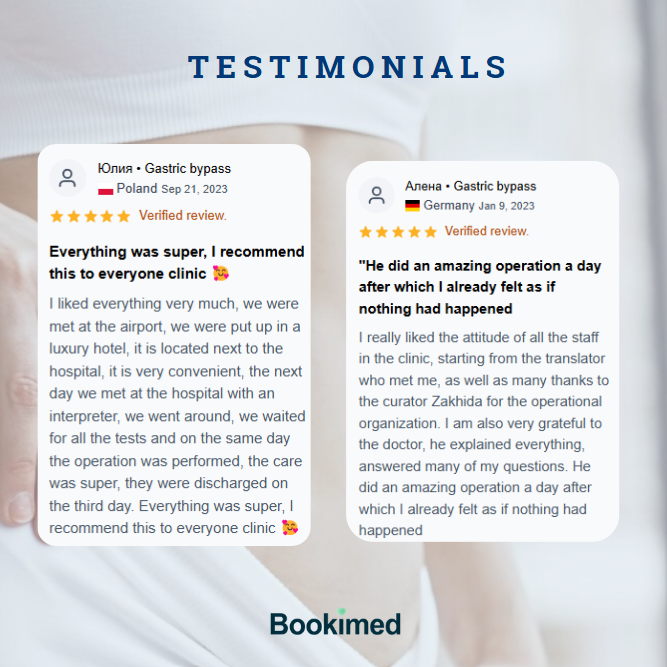
  • 患者からのレビューは好評で、多くの人が医療スタッフのプロ意識と親切さ、そして他国と比較して手頃な価格を高く評価している。
  • これらのクリニックの医師たちは、スリーブ状胃切除術の豊富な経験を有しており、そのため手術の成功率が高い。
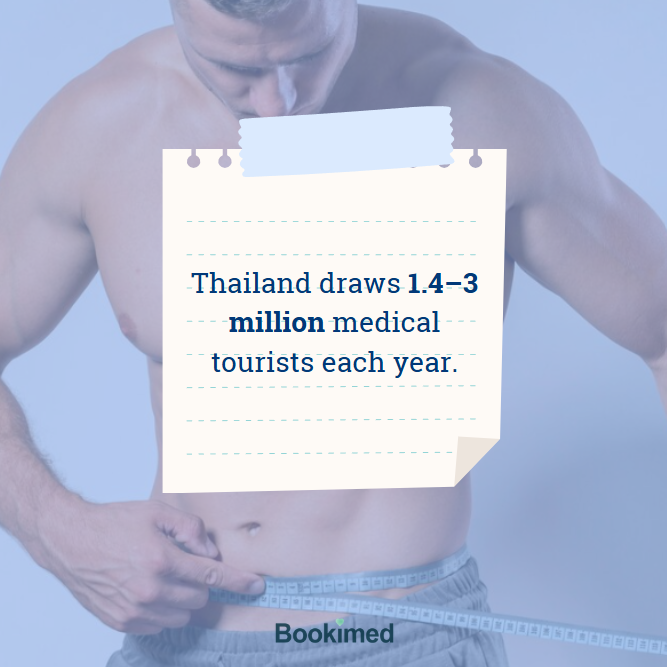
  • オーストラリア、ニュージーランド、中東、アジア、アメリカ、カナダ、イギリスなどから、胃スリーブ手術を受けるためにタイを訪れる医療ツーリストがいる。

結論として、タイは質の高い医療サービス、経験豊富な医師、そして手頃な価格で、優れた胃スリーブ手術の選択肢を提供しています。

タイでのスリーブ状胃切除術にはどれくらい時間がかかりますか?

タイでの手術は、術前検査、手術、回復期間を含めてわずか7~10日間です。

タイで胃スリーブ手術を受けるのに最適な病院はどこですか?

Bookimedは、タイでスリーブ状胃切除術を受けるのに最適な病院トップ5を特定しました。

  1. バムルンラード国際病院
  2. バンコク病院プーケット
  3. バンパコク国際病院9
  4. バンコク病院パタヤ
  5. シカリン病院

What happens if I experience complications after returning to Australia following gastric sleeve surgery in Thailand?

Australian residents with acute complications following surgery in Thailand can access emergency treatment through the public hospital system under Medicare. Public hospitals stabilise life-threatening issues like leaks or severe infections. However, finding local private specialists for routine follow-up or minor adjustments often proves challenging for medical tourists.

  • Public hospital care: Emergency departments must treat acute crises like pulmonary embolisms or staple-line leaks.
  • Medicare coverage: Australian residents generally receive emergency hospital treatment for post-operative complications at no cost.
  • GP oversight: Local GPs can manage initial blood tests for vitamins and protein levels.
  • Specialist reluctance: Private bariatric surgeons may decline taking over care due to medical liability concerns.
  • Documentation requirements: Detailed Thai operative reports and discharge summaries are vital for Australian clinical assessments.

Bookimed Expert Insight: Data from major hubs like Bumrungrad International Hospital and Bangkok Hospital Phuket reveals they use standards similar to top Australian private hospitals. This high level of accreditation means their digital health records are typically compatible with global standards. Always request your full operative notes in English before leaving Bangkok. This ensures local Australian specialists can safely interpret your surgical history.

Patient Consensus: Patients find that having all Thai medical documents and diet plans ready helps Australian emergency staff provide faster care. They suggest securing an Australian dietitian beforehand to manage the transition to solid foods smoothly after returning home.

What are the medical requirements to qualify for a gastric sleeve in Thailand?

To qualify for a gastric sleeve in Thailand, patients generally need a BMI of 37.5 kg/m² or higher. Alternatively, a BMI of 32.5 kg/m² with conditions like Type 2 diabetes is accepted. Most centres require a documented history of unsuccessful weight loss attempts. Mandatory medical clearance including cardiac and respiratory screenings is also required.

  • BMI thresholds: Automatic qualification at 37.5+; 32.5+ requires comorbidities like hypertension or sleep apnoea.
  • Age limits: Candidates are usually aged 18–65. Older patients require stricter cardiac clearance.
  • Medical screening: Passing blood panels, ECG, chest X-rays, and sometimes an endoscopy is mandatory.
  • Psychological readiness: Evaluations confirm no unmanaged psychiatric conditions or active substance abuse issues exist.
  • Commitment: Success requires a long-term dedication to dietary changes and nutritional supplement regimens.

Bookimed Expert Insight: Thai specialists like Dr Sarunnuch Panyavorakhunchai at Wansiri Hospital focus heavily on surgical risk profiles. Surgeons may delay approval to manage uncontrolled conditions like diabetes or sleep apnoea. This process improves safety outcomes even if candidates meet BMI criteria.

Patient Consensus: Many find that Thai hospitals require a medical work-up before final acceptance. This includes blood tests and doctor letters. Patients mention that surgeons frequently assess smoking status and prior surgeries as part of the safety evaluation.

How long do I need to stay in Thailand for gastric sleeve surgery?

Patients should plan to stay in Thailand for 10 to 14 days for gastric sleeve surgery. This timeframe allows for medical monitoring, pre-operative tests, and final surgical clearance. Surgeons typically require a follow-up 7 to 10 days post-surgery to check travel safety.

  • Clinical preparation: Specialists perform blood work and nutritional assessments 1 day before surgery.
  • Hospital admission: Patients spend 2 to 5 nights in private hospital rooms for monitoring.
  • Post-op monitoring: Surgeons confirm no leaks and stable fluid intake before hotel discharge.
  • Travel clearance: Doctors provide formal air travel clearance roughly 1 week after the procedure.
  • Recovery duration: Most Australians spend 7 to 10 days in local hotels before departing.

Bookimed Expert Insight: While basic packages cost from $5,400, choosing JCI-accredited centres like Bumrungrad International often provides access to robotic-assisted Da Vinci surgery. This technology is becoming a standard for complex cases in Bangkok. It offers higher precision and potentially smoother initial recoveries than traditional laparoscopic methods.

Patient Consensus: Visitors from Australia recommend staying at least 10 days to manage initial nausea. This also helps you ensure you can sip fluids comfortably. Plan for buffer days in case of swelling. Surgeons in Thailand only clear patients for long-haul flights once they are stable.

How is a gastric sleeve performed in Thai hospitals?

Gastric sleeve surgery in Thailand is typically a minimally invasive laparoscopic procedure. Surgeons at JCI-accredited hospitals in Bangkok and Phuket remove about 80% of the stomach. They use small incisions, specialised staplers, and high-definition cameras for safety and precision.

  • Surgical methods: Surgeons use laparoscopic or Da Vinci robotic-assisted approaches for high precision.
  • Hospital stay: Patients usually spend 2 hours in theatre and 3–5 nights in hospital.
  • Clinical expertise: Specialists like Dr Sarunnuch Panyavorakhunchai at Wansiri Hospital have bariatric fellowship training.
  • Recovery period: International patients must stay in Thailand for 7–11 days before flying.

Bookimed Expert Insight: Thailand is a major hub for complex bariatric cases. Bumrungrad International Hospital alone serves over 1,000,000 patients annually. A standard sleeve costs from $5,400. However, many patients choose robotic-assisted surgery starting at $10,000 for its accuracy. This is a significant saving compared to the $15,000 Australian average for this technology.

Patient Consensus: Patients in Thailand appreciate receiving detailed operative notes and discharge summaries in English for their GP. They find staged diet plans and remote follow-up options make the transition home smoother.

How much weight can I expect to lose after having a gastric sleeve performed in Thailand?

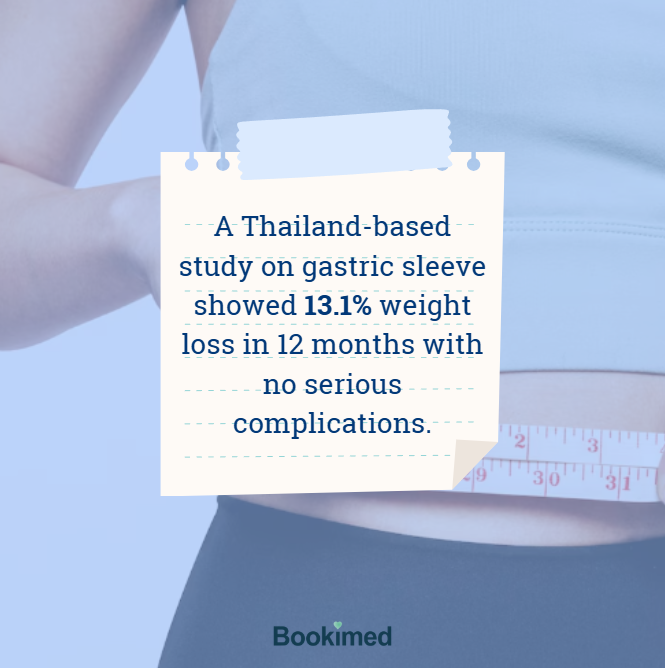
Patients typically lose 60% to 70% of their excess body weight within 12 to 18 months. This follows a gastric sleeve in Thailand. The surgery allows for rapid weight reduction in the first six months. This results from following specific post-operative dietary protocols and protein requirements.

  • Monthly timeline: Expect 15% to 25% excess weight loss during the first month.
  • Six-month milestone: Most patients achieve 45% to 55% of their total expected loss.
  • Weight plateau: Weight loss often slows after 12 months as the body reaches its lowest point.
  • Technique impact: Laparoscopic or robotic-assisted methods at Wansiri Hospital facilitate faster recovery.
  • Success factors: Long-term results depend on nutritional advice and managing hunger hormones like ghrelin.

Bookimed Expert Insight: Many patients focus on the surgery itself. However, the A$13,150 savings compared to the $15,000 average in Australia are significant. This allows patients to invest in private post-op support. Specialised surgeons like Dr Sarunnuch Panyavorakhunchai at Wansiri Hospital use minimally invasive techniques. These help patients start their movement programs sooner.

Patient Consensus: Initial weight loss often feels faster than expected. However, temporary plateaus are common in Thailand. Consistency with protein intake and lifestyle changes drives the final results.

Will language barriers affect my medical care for gastric sleeve surgery in Thailand?

Language barriers will not affect medical care in Thailand at accredited hospitals catering to international visitors. JCI-accredited facilities require core medical staff to be fluent in English. Surgeons often hold international certifications. Dedicated coordinators also provide interpreter services during all clinical appointments.

  • Clinical staff: Specialists at major hospitals often train in the USA or Australia.
  • Hospital coordinators: Facilities like Bangkok Hospital Phuket provide daily professional interpreter services.
  • Accreditation rules: JCI-accredited hospitals must verify patient understanding for legally informed consent.
  • Premium care: Centres like Wansiri Hospital and Sikarin Hospital specifically target Australian patient markets.

Bookimed Expert Insight: While specialists are fluent, nursing support in general wards may have a smaller vocabulary. Choosing a high-volume hub like Bumrungrad ensures support teams are accustomed to English-speaking needs. Bumrungrad treats over 500,000 foreign patients annually. This experience gap Makes coordination desks vital.

Patient Consensus: English-speaking teams in Thailand reduce confusion regarding medication schedules and hydration targets. Requesting discharge summaries in English helps local GPs safely manage follow-up care in Australia.

Can Australian patients use their Superannuation for gastric sleeve surgery in Thailand?

Australian patients can fund gastric sleeve surgery in Thailand through the Compassionate Release of Superannuation (CRS) program. The Australian Taxation Office (ATO) allows early release for medical treatment. The procedure must treat life-threatening conditions or ease chronic pain caused by obesity.

  • Specialist evidence: Applications require reports from two Australian-registered medical practitioners.
  • Clinical necessity: At least one report must come from an Australian bariatric specialist.
  • Public health: Doctors must confirm the surgery is unavailable in public health systems.
  • Hospital quotes: Explicit invoices from Thai centres like Bumrungrad International are mandatory.

Bookimed Expert Insight: Thai clinics frequently assist with the precise documentation needed for ATO approvals. Specialist bariatric surgeons like Dr Sarunnuch Panyavorakhunchai at Wansiri Hospital have laparoscopic fellowships. This expertise helps medical reports meet the ATO standard for clinical necessity.

Patient Consensus: Focus on securing ATO approval before booking flights or paying non-refundable clinic deposits. Patients recommend gathering all specialist medical records early to satisfy the heavy paperwork requirements.

タイ旅行前に知っておくべきことは何ですか?

正式名称

タイ王国

通貨

タイバーツ(米ドルでの支払いも可能です)

旅行に最適な時期

11月~4月上旬

言語

タイ語(ほとんどの医療スタッフは英語を流暢に話します)

ビザ

旅行には3~6ヶ月必要です

ヨーロッパとの時差

7時間

アメリカとの時差

12時

資本

バンコク

医療ツーリズムセンター

バンコク

人気のリゾート

サムイ島、プーケット、チェンマイ、チャン島、ホアヒン

タイの医療水準はどのくらいですか?

医療はタイ政府にとって重要な開発分野である。タイ政府は、国民の健康管理は国家政策の最優先事項であるべきだと考えており、年間約250億バーツを医療に支出している。

その結果、国内には36,673の医療機関があり、質の高い医療を提供している。サウジアラビア王国では、 64の医療センターが、世界中の医療サービスの質と安全性を向上させる国際機関であるJCI(国際医療機関評価機構)の認証を受けている。これらの医療機関は、認証取得率が最も高い。比較すると、イスラエルにはJCI認証を受けた医療機関が20施設、ドイツにはわずか10施設しかない。

こちらのホテルではどのようなサービスが提供されていますか?

タイ王国には、価格帯やサービスレベルが異なる様々なホテルがあります。タイのホテルの水準は、チュニジア、モロッコ、エジプトのホテルと同等です。ほとんどの観光客は、食事付きの4つ星または5つ星ホテルを選びます。これらのホテルは、豊富な食事オプション、広々とした手入れの行き届いた敷地、子供から大人まで楽しめるエンターテイメントなど、快適な滞在に必要なすべてを提供しています。一部のホテルには、宿泊客が無料で利用できるウォーターパークがあります。予算重視の旅行者は、ハーフボードまたは食事なしの経済的な3つ星ホテルを予約することもできます。

タイ旅行に最適な時期はいつですか?

タイのリゾート地の最大の魅力は、長いビーチシーズンです。東海岸と西海岸では気候が異なるため、旅行計画を立てる際にはこの点を考慮する必要があります。旅行に最適な時期は、涼しく乾燥した11月から4月上旬です。観光シーズンのピークは3月と5月で、気温は30℃に達します。

ビザは必要ですか?

現在、タイ王国では国籍によって異なるビザ制度が設けられています。一部の外国人はビザなしで60日間滞在できますが、他の外国人は14日間しか滞在できません。

タイにどれくらい滞在できるか、またどの国と簡単に国境を越えられるかについては、こちらで確認できます。

タイで医療を受けるためのビザを取得するには、どのような書類が必要ですか?

タイへのビザを取得するには、いくつかの書類が必要です。これらの書類は、出発予定日の90日前までに提出できます。必要な書類は以下のとおりです

  • 身分証明書
  • オンライン登録の確認とフォームへの記入
  • 収入証明書および資金証明(1人あたり20,000バーツ/1家族あたり40,000バーツ)
  • タイ滞在期間中の保険証券(原本とコピー)
  • 写真2枚(4×6インチ)
  • ビザの取得
  • 往復航空券(全額支払い済み)とホテル予約
  • 治療の必要性に関する医師の結論。

無料相談を受ける

最適な連絡方法をお選びください